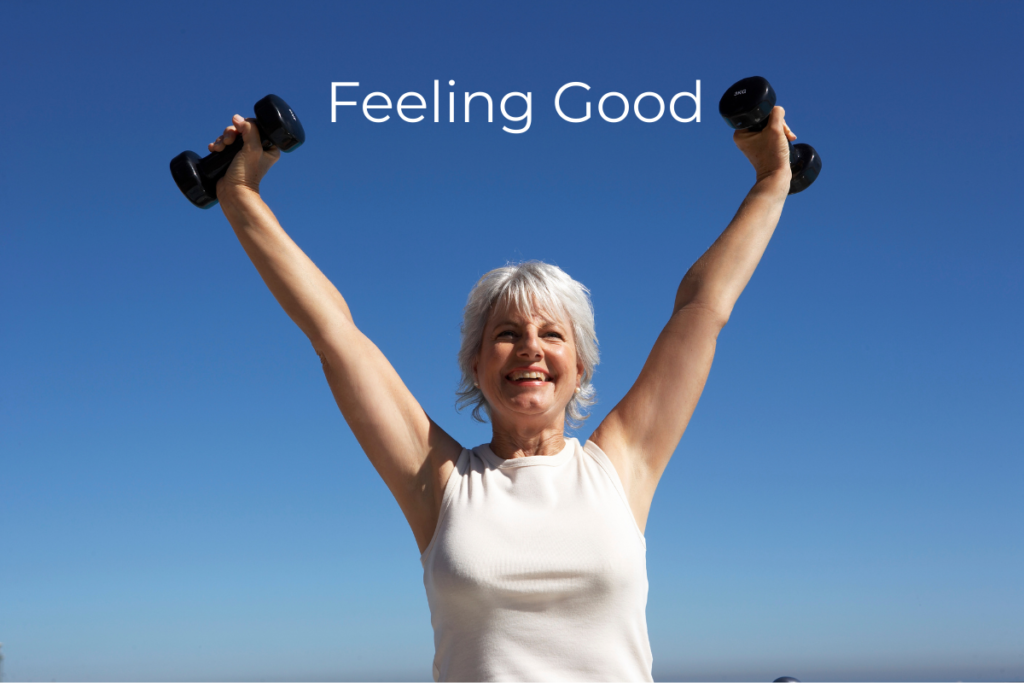
“Redefining Strength at Midlife “
A groundbreaking Australian study has just turned that old story on its head. The LIFTMOR Trial (Lifting Intervention for Training Muscle and Osteoporosis Rehabilitation) found that even women in their 60s and 70s — many with low bone density or osteoporosis — could safely lift heavy weights and dramatically strengthen their bones and muscles.
In fact, they didn’t just get stronger — they stood taller, moved faster, and felt more confident in their bodies.
This research sends a powerful message to all of us:
💪 “It’s never too late to build strength, resilience, and vitality — no matter your age or stage.”
🧠 What the Study Did
The LIFTMOR trial, led by researchers at Griffith University and The Bone Clinic in Australia, followed 101 postmenopausal women aged around 65 years.
Half the women took part in a supervised, twice-weekly, 30-minute high-intensity resistance and impact training (HiRIT) program — think squats, deadlifts, overhead presses, and jumping movements.
The other half did a gentle, home-based, low-intensity exercise routine.
After just 8 months, the results were astonishing:
- Bone strength increased by up to 3% at the spine and stayed stable at the hips (while the control group’s bone strength decreased).
- Muscle strength skyrocketed — leg and back strength improved by more than 30%.
- Balance, mobility, and posture all improved, helping reduce fall risk.
- No fractures or serious injuries occurred, despite the high-intensity nature of the training.
In short — women with fragile bones became stronger, steadier, and more confident through smart, supervised strength training.
🦴 The Science: Why Lifting Heavy Works for Bone Health
Our bones are living tissue — constantly renewing, repairing, and responding to how we move.
When bones feel the “load” of heavy movement (like lifting weights or jumping), they receive a message: “We need to get stronger!”
This is called the osteogenic response — it’s how bone tissue thickens and becomes denser. The LIFTMOR study proved that heavy, controlled loading — not light exercise — creates the kind of stress bones need to grow stronger.
“Our bones are not fragile glass; they’re like muscles — they adapt to what we ask of them.”
💪 The Mind-Body Connection: Strength Changes Everything
Something powerful happens when women start to lift again — not just physically, but mentally.
In the study, participants reported feeling:
- More confident in their bodies
- More independent in daily life
- Happier with their posture and energy
- Less fearful of movement or injury
That confidence shift is huge. It’s the difference between moving through life cautiously and stepping forward boldly.
For many women, lifting weights became an act of reclaiming power — physically and emotionally.
🌸 Breaking the Myth: “I’m Too Old to Start”
If you’ve ever thought, “I’m too old to lift weights,” here’s what this research says loud and clear: you’re not.
- The women in the LIFTMOR study were 58 to 75 years old.
- Many had osteopenia or osteoporosis (low bone density).
- None had previous experience lifting weights.
And yet — they not only tolerated the training well but thrived.
The key difference? Supervision, technique, and progression.
At The Bone Clinic (where the study was run), women learned proper form, started slowly, and built up gradually to heavier loads. It wasn’t about ego or competition — it was about precision, confidence, and care.
⚖️ Beyond the Bones: The Hidden Benefits of Getting Strong
Strength training in menopause isn’t just about bones — it’s a total-body, total-life upgrade.
✅ Better posture – Standing taller reduces back strain and helps maintain confidence and mobility.
✅ Improved metabolism – More muscle means more energy burn, even at rest.
✅ Reduced fall risk – Strong legs and better balance mean fewer accidents.
✅ Better mood and focus – Exercise supports brain health and combats stress hormones.
✅ Empowerment – Knowing you can lift your own body weight changes how you move through the world.
This is what we call functional strength — being able to move, lift, and live with ease and freedom.
🧬 The New Definition of Aging Well
Menopause is not the end of strength — it’s the beginning of a smarter relationship with your body.
You don’t have to accept muscle loss, fatigue, or weakness as part of aging. Science has given us the tools to reverse much of that — naturally.
“At any age, you can build strength, protect your bones, and increase your vitality — if you challenge your body with intention.”
It’s not about becoming a bodybuilder — it’s about becoming strong enough to live the life you want.
🌺 Final Thoughts from Maree
As a clinical nutritionist and longevity practitioner, I see this study as one of the most empowering pieces of research for women in midlife. It proves that with guidance, the right nutrition, and proper training, your body is capable of remarkable transformation.
10 things I love about building strength for me personally:
- I feel more empowered
- I sleep more soundly
- Difficult tasks are somehow more doable
- My energy has increased dramatically
- I feel a great sense of achievement when I know I am doing something good for my body for now and in the future
- My clothes fit better, and I now wear sleeveless tops or dresses (first time in years)
- My body fat is reducing and my muscle mass increased particularly in my legs
- My mood is so much better. I genuinely feel happier
- My skin is clearer and brighter
- I am much more conscious about what I eat and drink and find I tend to eat less after the first few weeks of training. The first two weeks of training I am always starving.
The next time you think you’ve passed your physical prime, remember this:
Your body is still listening.
It still adapts.
It still wants to be strong.
🌞 Takeaway Message
It’s never too late to get strong.
Start with guidance.
Lift safely.
Eat well.
And most importantly — believe in your body’s ability to grow, no matter your age.
👉 Ready to strengthen your body from the inside out?
Join the MIDLIFE ADVANTAGE newletter for practical tips on nutrition, movement, and longevity for midlife women.